If you’ve ever asked how much YouTube pays per view, you’re not alone. It’s one of the most searched questions, and also one of the most misunderstood.
The short version is this: YouTube doesn’t pay a fixed amount for each view. Two videos with the same views can earn very different amounts, which is why the numbers online often feel all over the place.
In this guide, we’ll break down how YouTube payments actually work, what creators usually earn per view, and what factors make those earnings go up or down.
Does YouTube Pay Per View? The Short Answer
Short answer: no.
YouTube does not pay a fixed amount for each view. Instead, creators earn money through ads shown on their videos. When those ads are watched or interacted with, YouTube shares part of that revenue with the creator.
That’s why you’ll often see earnings discussed per 1,000 views, not per single view.
If you want YouTube’s own explanation of how creator earnings fit into the bigger picture, they outline it clearly in their overview of how YouTube explains the creator economy from its own perspective.
In simple terms:
- Some views show ads
- Some ads get skipped
- Some viewers never see ads at all
So a view can earn something, or nothing.
What Creators Usually Earn Per 1,000 Views
Most creators earn within a range, not a fixed number.
That range depends on things like:
- Where your viewers are located
- What niche your content falls into
- How attractive your audience is to advertisers
Two channels can get the same number of views and still earn very different amounts. That’s normal.
There is no universal YouTube pay rate.
Simple Earnings Examples
Here’s a simple way to look at how views can translate into earnings.
These are estimates, not guarantees.
| Views per video | What That Can Look Like |
| 1,000 views | Earnings are usually small. Some views may not show ads at all, so income can be minimal. |
| 10,000 views | Earnings start to feel noticeable, especially if your content attracts higher-paying advertisers. |
| 50,000 views | Ad revenue becomes more consistent, though results still depend on audience and niche. |
| 100,000 views | For many creators, this is where YouTube starts feeling like a real income stream. |
The key thing to remember is that the same number of views can earn very different amounts. That difference usually comes down to where your viewers are located, what kind of content you make, and how ads perform on your videos.
Once you understand those factors, YouTube earnings start to make a lot more sense.
What Affects How Much YouTube Pays You

YouTube earnings change from channel to channel because several factors influence how much advertisers are willing to pay.
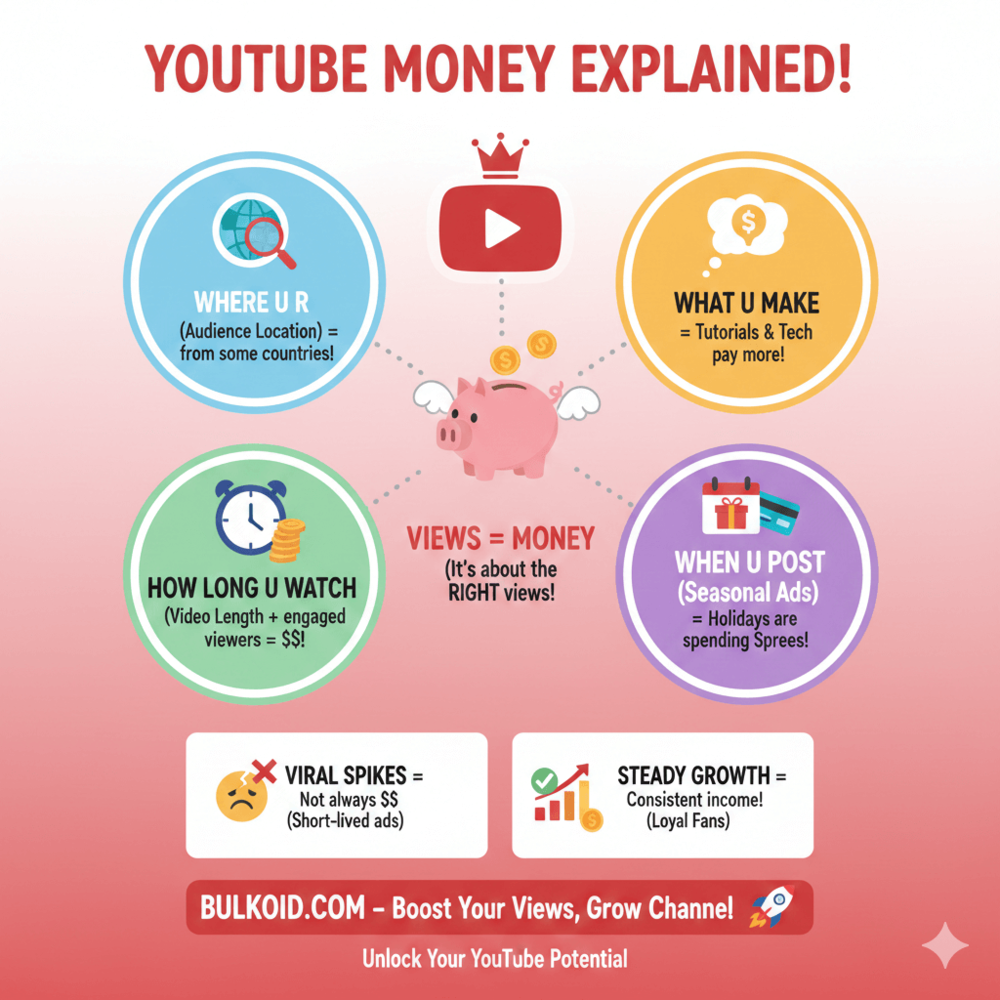
🌍 Audience Location
Where your viewers live matters. Advertisers usually pay more to reach audiences in certain countries.
Views from those regions tend to generate higher ad revenue than views from regions with lower ad demand.
🎯 Content Niche
Not all topics earn the same. Some niches attract higher-paying advertisers because brands see more value in those audiences.
Higher-paying niches often include:
- Business and finance
- Technology and software
- Education and tutorials
Lower-paying niches often include:
- General entertainment
- Vlogs and lifestyle
- Trend-based or reaction content
⏱ Video Length and Ad Placement
Video length affects how many ads can appear on your content.
Longer videos usually allow for more ad placements, especially mid-roll ads, while shorter videos rely on fewer ads overall.
👀 Viewer Behavior
Ad revenue depends on how viewers interact with ads. Skipped ads, low watch time, or ad blockers can reduce earnings.
Engaged viewers who watch longer tend to generate more value.
📅 Seasonal Ad Spend
Ad rates change throughout the year based on advertiser demand.
Higher ad rates often appear during:
- End-of-year holidays
- Major shopping seasons
- Large brand campaigns
When you put all of this together, one thing becomes clear. View count on its own does not tell the full earnings story.
That’s why it’s important to understand what views actually mean for income, and where they fall short.
Why Views Alone Do Not Equal Income

It’s easy to assume more views automatically mean more money. In reality, that’s not always how YouTube works.
Not every view shows an ad. Some viewers skip ads. Others use ad blockers. In those cases, the view still counts, but it may not generate revenue.
Viral videos are a good example. A video can get a huge spike in views but earn less than expected if:
- Most viewers skip ads
- The audience comes from lower-paying regions
- The content attracts lower advertiser demand
On the other hand, a smaller channel with steady views can earn more over time. Consistent uploads, loyal viewers, and strong watch time usually lead to better monetization than one-off viral hits.
Think of views as visibility, not income by default. Views open the door, but earnings depend on what happens after someone presses play.
This is also why many creators don’t rely on ads alone.
Once you see how unpredictable ad revenue can be, it makes sense to look at other ways YouTube can support your income.
Other Ways YouTube Creators Make Money
Ad revenue is only one part of the picture.
Many creators build income by combining ads with other monetization options that are less dependent on views alone.
🤝 Sponsorships and Brand Deals
Brands pay creators directly to feature or mention their products. These deals often depend more on audience trust and relevance than pure view count.
Sponsorships can include:
- Dedicated video mentions
- Integrated product placements
- Sponsored tutorials or reviews
Even smaller channels can land brand deals if their audience matches what the brand is looking for.
🔗 Affiliate Links
Affiliate marketing lets creators earn a commission when viewers purchase through their links. This works well for tutorials, reviews, and recommendation-style content.
🎥 Channel Memberships and Live Features
Some creators earn recurring income through memberships, Super Chats, and live interactions.
This usually works best once you start using YouTube live streams to build stronger viewer connections.
🛍 Products and Services Outside YouTube
Many creators use YouTube as a traffic source rather than the final income stream. They promote their own products or services alongside their videos.
Common examples include:
- Digital products like guides or templates
- Online courses or coaching
- Physical products or merchandise
If you want a broader look at how creators mix these income streams, Shopify has a helpful breakdown on different ways creators earn money on YouTube beyond ads.
How Views Fit Into Long-Term Monetization

Views still matter, even if they don’t pay the same every time. Views create visibility, and visibility is what unlocks monetization options over time.
More views usually lead to:
- More chances for ads to run
- Better signals for the algorithm
- More opportunities for people to discover your channel
For smaller channels, consistency matters more than viral spikes. Steady growth helps YouTube understand your content and helps viewers recognize your channel.
That’s why many creators focus on getting more YouTube views consistently instead of chasing viral moments.
This is also where extra visibility support can help.
Bulkoid offers YouTube growth services designed to increase reach and exposure while you continue building content naturally.
It’s not a replacement for quality videos, but a way to support momentum while real engagement grows.
What to Take Away From This
YouTube doesn’t pay a fixed amount per view. Earnings depend on your audience, content, and how ads perform.
Views matter because they create visibility, and visibility opens the door to monetization over time.
Focus on steady growth, not quick spikes. That’s what leads to more predictable results.
👉 Want More Views?
If your videos are solid but reach feels slow, extra visibility can help. Bulkoid offers YouTube views designed to support growth and get more eyes on your content.
Buy YouTube views with Bulkoid and help your videos gain momentum faster.