How much does SoundCloud pay per stream is a question many artists ask once their plays start to grow. Seeing your numbers go up feels great, but it also makes you wonder if those streams actually turn into money.
SoundCloud does pay creators, but not at a fixed rate per play. Earnings depend on how listeners engage with your music and how SoundCloud’s payout system works.
In this guide, we’ll explain it clearly and simply, so you know what to expect and how payouts really work.
The Short Answer: How Much Does SoundCloud Pay Per Stream?
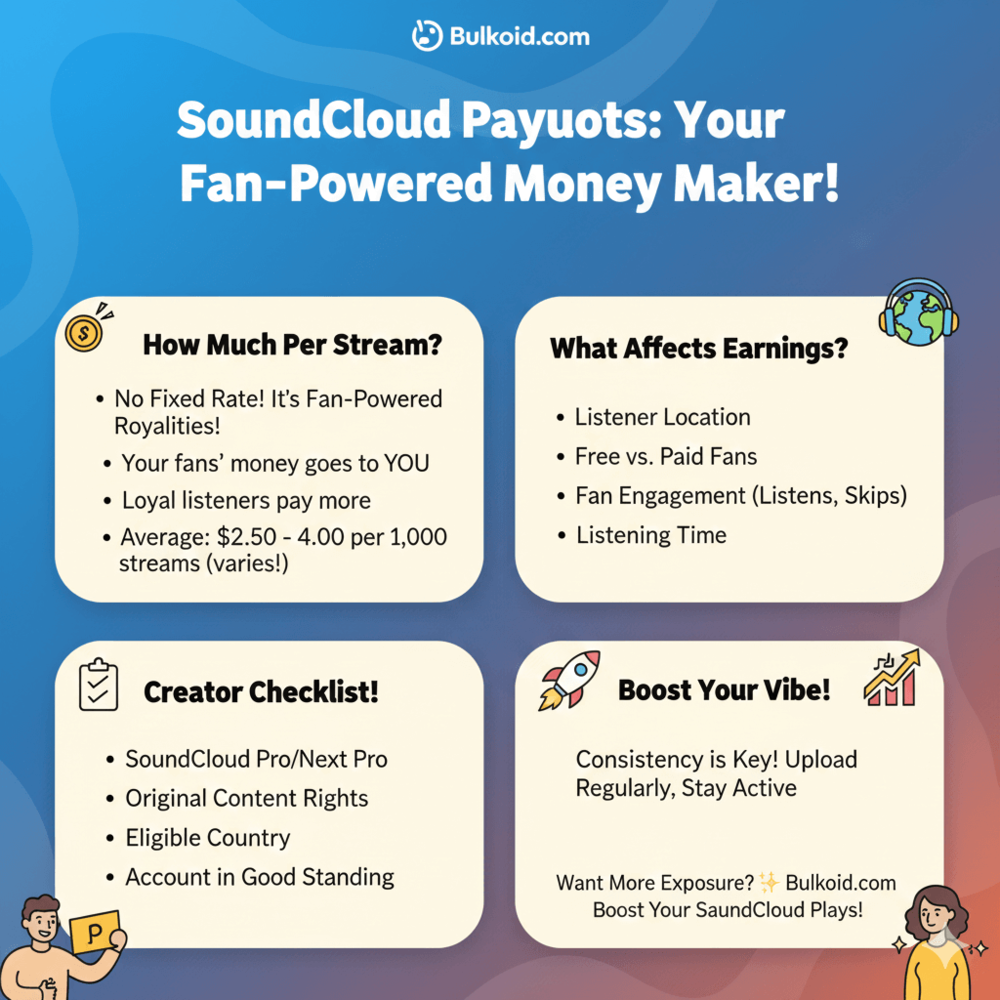
There is no fixed amount that SoundCloud pays per stream. Unlike some platforms that use an average payout, SoundCloud’s earnings change from artist to artist and even from listener to listener.
Most artists earn somewhere between a fraction of a cent to a few cents per stream. That might sound vague, but it is intentional. Your payout depends on who is listening, where they are located, and whether they are using a free or paid account.
This means two artists with the same number of plays can earn very different amounts. On SoundCloud, the value of a stream comes from the listener behind it, not just the play count itself.
How SoundCloud Pays Artists (Fan-Powered Royalties)
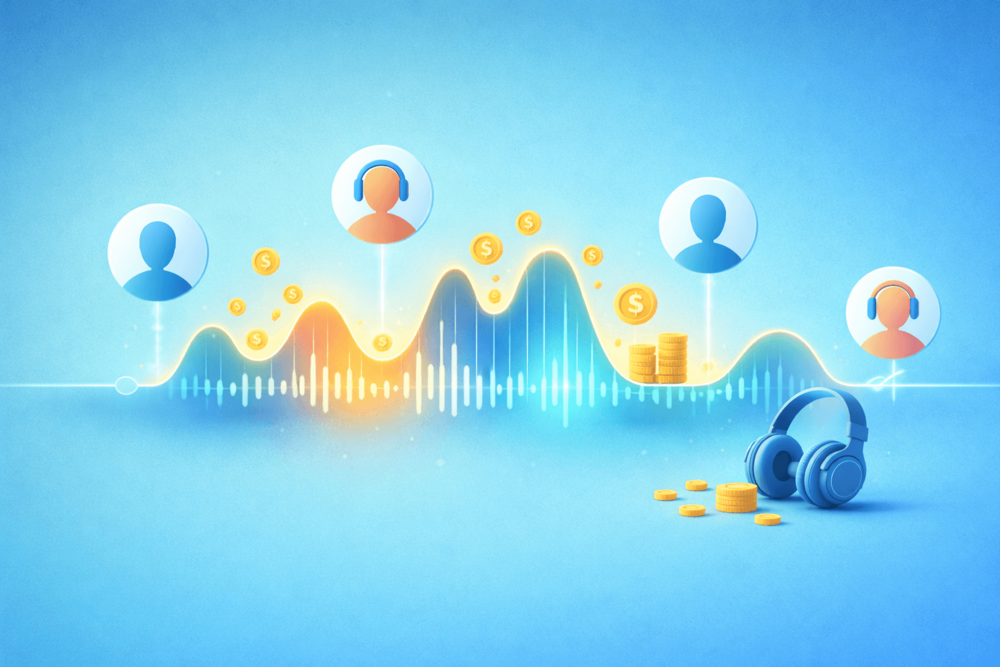
SoundCloud uses a system called fan-powered royalties. Instead of putting all subscription money into one big pool, SoundCloud looks at what each listener actually plays.
If someone spends most of their time listening to your tracks, a larger share of their subscription or ad revenue goes to you.
If they barely listen to your music, your payout from that listener stays small. It is a more direct way of rewarding artists for real listener interest.
This is one of the main ways SoundCloud stands apart from other platforms.
If you are curious how this compares with Spotify’s approach, this difference is explained clearly in how SoundCloud and Spotify differ for artists.
What Affects Your SoundCloud Earnings?
Several factors shape how much you earn from fan-powered royalties:
🌍 Listener location: Streams from some countries tend to generate higher payouts than others.
💳 Free vs paid listeners: Paid subscribers usually bring in more revenue than ad-supported listeners.
🎧 Fan engagement: Listeners who play your tracks often and for longer periods contribute more.
✅ Monetization status: Your tracks must be eligible and monetization needs to be turned on.
⏱️ Listening time: Longer sessions matter more than quick skips.
Because of this, building a small but loyal audience can be more valuable than chasing high play counts with low engagement.
SoundCloud Payout Examples (1,000 vs 1 Million Streams)
Because SoundCloud does not pay a fixed rate per stream, earnings can look very different from one artist to another. That said, a few rough examples help set expectations.
With around 1,000 streams, earnings are usually small. For most artists, this means a few dollars or even less. At this stage, SoundCloud works more as a discovery platform than a real income source.
At 1 million streams, payouts become more noticeable, but they still depend heavily on listener behavior. Artists with engaged fans who listen often and for longer sessions tend to earn more than those with casual, one-time plays.
For some artists, SoundCloud has gone far beyond small payouts. A few used it as a launchpad, turning early listener support into full careers.
You can see real examples in artists who turned SoundCloud success into major careers, where streams led to wider visibility and income.
The key thing to remember is that stream count alone never tells the full story. On SoundCloud, how people listen matters just as much as how many times they press play.
SoundCloud Monetization Requirements
Before you can earn money on SoundCloud, a few things need to be in place. None of them are complicated, but missing one can stop payouts entirely.
To monetize your music on SoundCloud, you need:
Original content: You must own the rights to the tracks you upload.
Monetization turned on: Earnings only start once monetization is enabled in your account settings.
Track approval: SoundCloud reviews each track before allowing monetization.
Eligible region: Monetization is only available in certain countries.
Active account: Your account needs to follow SoundCloud’s rules and stay in good standing.
If you are planning a bigger release with multiple tracks, organizing them properly can help with visibility and consistency, similar to how to release an album on SoundCloud.
Once these basics are covered, payouts run in the background while you focus on growing your audience.
SoundCloud vs Other Streaming Platforms

SoundCloud vs Apple Music
SoundCloud focuses on listener behavior and fan engagement, while Apple Music relies on a more traditional payout model.
On Apple Music, streams are pooled and paid out based on total plays across the platform.
On SoundCloud, loyal listeners who play your tracks often can have a bigger impact on what you earn.
SoundCloud vs Spotify
Spotify pays artists based on total streams compared to everyone else on the platform.
SoundCloud pays based on what each listener actually listens to.
This means a smaller but dedicated audience can go further on SoundCloud than on Spotify.
SoundCloud vs YouTube Music
YouTube Music earnings depend heavily on ads and watch time, which can make payouts feel inconsistent.
SoundCloud’s system is more music-focused and easier to understand for artists who mainly care about audio streams rather than video performance.
Each platform works best for different goals.
SoundCloud shines when you are building an audience, testing music, and connecting directly with listeners, while other platforms often make more sense once your reach is larger.
Can You Actually Make Money on SoundCloud?
Yes, you can make money on SoundCloud, but it usually does not happen overnight. For most artists, SoundCloud works best as a long-term platform rather than a quick source of income.
Artists with a small but loyal audience often do better than those chasing viral numbers. When listeners come back often, play full tracks, and engage with your profile, earnings tend to grow more steadily.
That said, SoundCloud alone is rarely enough. Many artists use it alongside other platforms to build visibility, test new releases, and slowly turn attention into income. The key is consistency and giving listeners a reason to return.
In the next part, we’ll look at how artists increase streams without gaming the system, and what actually helps music get heard.
How Artists Increase Streams

Growing on SoundCloud usually comes down to a few consistent habits. There are no shortcuts that last, but the right basics do add up.
What tends to help most:
📅 Upload regularly: Consistent releases give listeners a reason to come back. Spacing tracks out often works better than dropping everything at once.
💬 Stay active: Reply to comments, repost other artists, and keep your profile active so it feels alive, not forgotten.
📣 Promote outside SoundCloud: Sharing tracks on social media or other platforms helps new listeners discover your music.
📢 Understand the free listener experience: Ads are part of SoundCloud for free users and can affect how people listen.
If you want to dig into that, why SoundCloud plays ads and how listeners can remove them explains it clearly.
👀 Focus on visibility: Even strong tracks struggle if people never see them. Exposure is what turns plays into momentum.
Turning Visibility Into Momentum With Bulkoid
This is where tools like Bulkoid fit in naturally. When a track gets more exposure early on, it has a better chance of reaching real listeners who stick around.
Visibility helps your music get noticed, which is the first step toward consistent streams and long-term growth.
Putting SoundCloud Earnings in Perspective

SoundCloud can pay artists, but earnings depend on more than just stream counts. Listener behavior, engagement, and consistency all play a role in how much you earn.
For most artists, SoundCloud works best as a growth platform first and an income source second. Building a loyal audience, staying active, and focusing on visibility gives your music the best chance to perform over time.
When you understand how payouts work and set realistic expectations, SoundCloud becomes easier to use strategically instead of guessing what your streams are worth.