How is Threads different from Twitter is a question many creators, brands, and everyday users are asking as both platforms compete for attention.
At first glance, they look similar. Short text posts, public conversations, follower counts, and trending discussions. But once you spend time on each platform, the differences start to show.
Threads and Twitter operate with different ecosystems, algorithms, content cultures, and growth dynamics. Whether you are building a personal brand, managing a business account, or simply deciding where to invest your time, understanding those differences can help you make a smarter strategic choice.
Platform Origins and Ecosystem Differences
One of the biggest differences between Threads and Twitter starts with ownership and ecosystem structure.
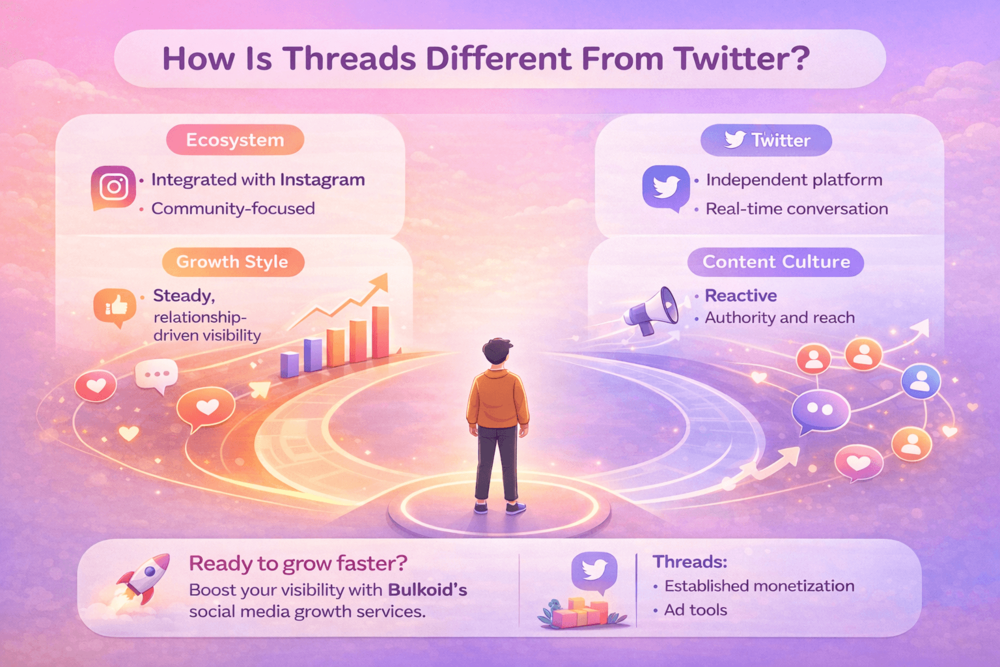
Threads is owned by Meta and built directly on top of Instagram.
Twitter operates under X Corp as a standalone social network.
That distinction shapes how each platform feels and grows.
Threads: Built Inside the Instagram Ecosystem
Threads allows users to sign up instantly through Instagram. You can import your profile details, verify your account automatically, and even bring over existing followers. That dramatically lowers the barrier to entry.
If you want a deeper look at how the platform launched and why adoption accelerated so quickly, read What Is Threads and Why Are People Using It?.
Because Threads is integrated into the Meta ecosystem, growth often feels connected rather than isolated. Your audience does not start at zero if you already have Instagram traction.
Meta has also continued tightening this integration. Threads introduced simplified sharing back to Instagram, reinforcing its ecosystem-first strategy, as explained in Social Media Today’s report on Threads Instagram sharing updates.
In practical terms, Threads feels like an extension of Instagram’s social graph.
Twitter: Independent and Self-Contained
Twitter does not rely on another platform for onboarding or audience transfer. Every follower, interaction, and conversation is built inside Twitter itself.
There is:
- No automatic follower import
- No built-in Instagram crossover
- No ecosystem boost from another Meta property
That independence gives Twitter a distinct identity. It stands on its own. But it also means growth depends entirely on in-platform visibility.
Growth and Visibility

Growth behaves differently on Threads compared to Twitter, even though both platforms rely on engagement signals.
Threads is still evolving. Because of that, the algorithm appears to prioritize active conversations, thoughtful replies, and consistent posting over raw follower numbers. Smaller accounts can gain traction quickly if their posts spark meaningful interaction.
Twitter operates inside a far more mature ecosystem. Visibility often depends on network strength, repost velocity, and alignment with trending discussions. Established accounts with strong engagement histories usually hold the advantage.
Early Advantage vs Established Competition
Threads currently offers what many creators see as an early-stage opportunity. Competition is lower, discovery feels more fluid, and new accounts can surface faster than on older platforms.
That said, growth is not automatic. Consistency, conversational depth, and timing still matter. Accounts that focus on sustainable engagement patterns instead of aggressive tactics tend to perform better, especially when applying strategies similar to those explained in sustainable Threads follower growth strategies.
Twitter rewards speed and amplification. A single repost from a high-authority account can create immediate exposure. Threads growth tends to feel steadier and more relationship-driven.
Algorithm Behavior
Threads appears to weigh:
- Reply quality
- Discussion depth
- Interaction consistency
- Instagram-connected activity
Twitter weighs:
- Repost momentum
- Trend participation
- Engagement spikes
- Follower authority
In practical terms: Threads promotes conversation longevity. Twitter promotes visibility velocity.
That structural difference shapes how creators approach each platform. On Threads, building community strengthens reach over time. On Twitter, tapping into the right moment can drive explosive growth.
Content Style and Platform Culture
Even if Threads and Twitter share a similar format, the tone and culture on each platform feel noticeably different.
The way people communicate, react, and build visibility reflects the environment each platform encourages.
Twitter: Real-Time, Reactive, and Debate-Driven
Twitter thrives on immediacy.
Breaking news spreads fast. Public debates unfold in real time. Strong opinions often gain more traction than neutral observations. The repost and quote culture amplifies commentary, especially around politics, sports, tech, and cultural moments.
Because of this structure:
- Speed matters
- Hot takes travel quickly
- Controversy can boost reach
- Trends dominate visibility
Twitter often feels like a live global conversation. If something is happening in the world, it is likely happening on Twitter first.
Threads: Conversational and Community-Oriented
Threads leans into a softer tone.
The platform feels closer to Instagram’s social energy than Twitter’s debate culture. Posts often read like reflections, personal thoughts, or casual observations rather than rapid commentary on breaking events.
You will notice:
- More storytelling
- Less public confrontation
- Fewer viral arguments
- A stronger focus on community tone
Threads encourages discussion without pushing users toward conflict-driven engagement. Conversations tend to feel lighter and less performative.
Visual Influence
Because Threads is tied to Instagram, visual identity still plays a role even though the platform centers around text. Users often maintain brand consistency with their Instagram presence.
Twitter, in contrast, prioritizes information density. The culture favors updates, commentary, and real-time relevance over aesthetic cohesion.
This difference influences brand strategy.
On Threads, personality and relatability often perform well.
On Twitter, authority and timeliness often perform better.
Understanding platform culture is essential because content that works on one platform may feel out of place on the other. The mechanics might look similar, but the social expectations are not.
Monetization and Business Potential

If you are deciding between Threads and Twitter for business purposes, monetization features play a major role.
Twitter has a longer history of offering revenue tools. It supports ads, subscription models, creator monetization programs, and revenue sharing initiatives. Businesses can run paid campaigns, promote posts, and leverage established advertising infrastructure.
Threads is still developing in this area.
Twitter: Established Revenue Infrastructure
Twitter allows brands to:
- Run targeted advertising campaigns
- Promote posts directly
- Offer subscriptions
- Participate in creator monetization programs
The advertising system is mature and built for scale. Brands that rely on paid distribution and advanced targeting may find Twitter more immediately practical.
Threads: Early Stage but Expanding
Threads does not yet offer the same depth of monetization tools. However, that does not mean it lacks business potential.
Right now, Threads functions more as a brand-building environment. It supports community engagement, organic reach, and audience development inside the broader Meta ecosystem.
Communication features are still evolving as the platform matures. For example, updates around private messaging and direct interaction have been rolling out gradually, with recent developments examined in Metricool’s breakdown of how Threads direct messages work. These changes signal that Threads is still building its communication infrastructure.
As the platform grows, monetization tools are likely to expand. But at this stage, it is more about positioning than direct revenue generation.
Brand Strategy Considerations
If your goal is:
Immediate ad scaling → Twitter offers more tools.
Long-term ecosystem positioning → Threads offers early opportunity.
Community-driven brand building → Threads feels more aligned.
Real-time authority and commentary → Twitter remains stronger.
No matter which platform you choose, visibility still depends on momentum. Early engagement signals often determine how far your content travels. That is where strategic growth support can make a difference.
If you are focusing on Threads, services like buying Threads followers can help strengthen your initial social proof while you build organic conversations.
If Twitter is your priority, options such as Twitter followers can support credibility during the early growth phase while you establish authority in your niche.
Used correctly, growth services should complement a real content strategy, not replace it. The goal is amplification, not shortcuts.
Which Platform Should You Choose?
By now, the difference between Threads and Twitter should feel clearer. The better platform depends less on features alone and more on your goals.
Instead of asking which one is better, ask which one aligns with how you create and grow.
Choose Threads If
- You already have an Instagram audience
- You want smoother onboarding and ecosystem integration
- You prefer conversation over confrontation
- You are looking for early-stage organic visibility
- You focus on community building and brand personality
Threads works well for creators and brands that want to nurture relationships inside the Meta environment.
Choose Twitter If
- You thrive in real-time discussions
- You rely on trending topics and breaking news
- You want advanced ad tools immediately
- You are comfortable with debate-driven visibility
- You want access to established monetization systems
Twitter remains strong for commentary, authority positioning, and fast-moving content.
Or Use Both Strategically
Many creators treat Threads and Twitter as complementary rather than competing platforms.
Threads can support community depth and brand voice.
Twitter can support reach spikes and topical authority.
The key difference is not format. It’s about the ecosystem, culture, and growth mechanics.
Understanding how is Threads different from Twitter helps you make a strategic choice instead of guessing where your content belongs.
Conclusion

How is Threads different from Twitter? The format may look similar, but the ecosystem, culture, and growth mechanics are not.
Threads is connected to Instagram and built around community conversations. Twitter is independent and driven by real-time visibility and amplification.
Your choice depends on how you want to grow. Threads supports long-term brand positioning inside the Meta ecosystem. Twitter supports fast exposure and trend-based authority.
🚀 Ready to grow faster instead of waiting for the algorithm to catch up?
Bulkoid offers powerful social media growth services for Threads, Twitter, and other major platforms to help you build credibility, strengthen social proof, and boost visibility with confidence.